
Why Some Campaigns Convert and Other Ones Get Ignored

Sad Fact: Most marketing dollars are wasted.
Not because marketers aren't working hard — but because they're working without a disciplined, data-driven framework. After decades of running high-performance direct marketing campaigns for some of the most demanding brands in financial services, insurance, and energy, we've seen what works.
And more importantly, we've seen what doesn't.
Here are the direct marketing best practices that separate campaigns that generate real, measurable results from the ones that quietly fade into irrelevance.
1. Start With Data. End With Data. Work in the Middle With Data.
The single biggest lever in direct marketing isn't your creative, your channel, or even your offer — it's your list. Precision targeting is the foundation of every high-performing campaign. If you're sending the right message to the wrong audience, you're not just wasting budget — you're actively undermining your brand.

Seasoned direct marketing starts with a rigorous data strategy:
Who is your ideal prospect?
What behavioral signals predict conversion
Which demographic and psychographic attributes correlate with your best existing customers?
The answers to those questions should inform every decision you make in creating your campaign.
But don't just rely on a single data source. Layer in third-party data, first-party CRM insights, and predictive modeling to build audience segments that are truly actionable — not just those broad demographic buckets that feel convenient.
2. Make the Call-to-Action Do the Heavy Lifting

Direct marketing lives or dies by the CTA. This isn't a space for subtlety. Whether you're driving prospects to call a toll-free number, visit a landing page, scan a QR code, or return a reply card, the call-to-action needs to be concrete, clear, urgency-driven, and friction-free.
The best CTAs answer three questions instantly:
What do you want me to do?
Why should I do it now?
What do I get and how do I get it?
Vague language like "Learn More" or "Find Out How" are too vauge. Be specific. "Get Your Free Quote in 60 Seconds" or "Claim Your Rate by April 15" are the kinds of CTAs that actually move people.

3. Integrate Your Channels — Don't Just Run Them in Parallel
A direct mail piece that lands on a Monday. A follow-up email on Wednesday. A retargeted digital ad on Friday. A postcard on Saturday. When these touchpoints are strategically sequenced and visually cohesive, response rates will soar. When they're siloed — designed by different teams with different messaging — they create confusion and erode trust. Not to mention, that kind of chaos can reflect poorly on your brand.
The most effective direct marketing programs treat every channel as part of a single, coordinated conversation with the consumer. Direct mail anchors the physical world. Email and SMS extend the reach and add immediacy. Digital retargeting reinforces the message and recaptures intent signals. Together, they create a “surround-sound” effect that no single channel can replicate on its own.
The key is consistent messaging with channel-specific execution. Your direct mail and your email should feel like they are from the same “family” and come from the same brand — because they do.

4. Personalization Must Be Meaningful
Inserting a first name into a subject line isn't personalization — it's a mail merge. Real personalization means tailoring the offer, the imagery, the copy, the tone, and even the format to what you actually know about the individual recipient.
A 58-year-old homeowner in suburban Chicago researching Medicare supplement plans has different needs than a 64-year-old renter in Phoenix doing the same. If your creative doesn't reflect that distinction, you're speaking as clearly or persuasively as you could be to that reader.
That said, personalization must support the message — not dilute it. By the same token, hyper-personalization that feels invasive or gimmicky can actually suppress response. Use data to be relevant, not to show off how much you know. You don’t want to come off as “Big Brother” or worse, creepy.
5. Test Relentlessly. But Test Smart.
Direct marketing's greatest advantage over other media is measurability.
Unlike a TV spot or a billboard, every direct marketing touchpoint can be tracked, tested, and optimized. The best programs run structured A/B tests on offers, headlines, formats, and list segments — and they do it systematically.

CAUTION: Testing too many variables at once, running tests that aren't statistically significant, or optimizing for the wrong metric tell you nothing. Clicks don't always equal conversions. Response rate doesn't always equal revenue. Define what "winning" means before the test launches, and build your sample sizes accordingly.
The goal is a continuous test-and-learn cycle — one where every campaign tells you something that makes the next campaign even smarter.
6. Measure What Matters
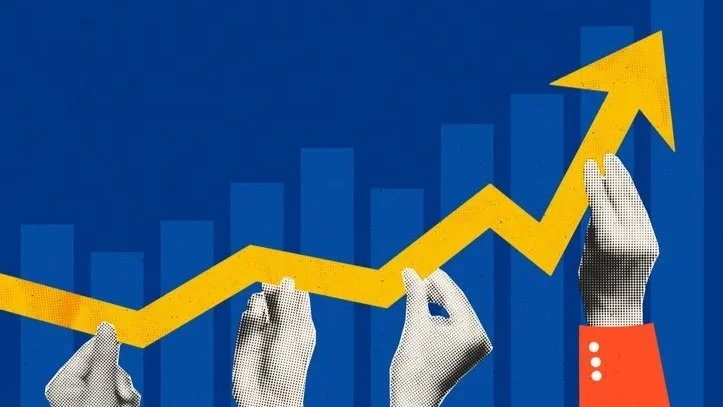
Response rates are a starting point, not a destination. The metrics that actually matter are cost per acquisition (CPA), lifetime customer value, and return on marketing investment (ROMI). These are the numbers that justify budget, earn your confidence, and drive strategic decisions.
Build tracking into every campaign from the start — unique URLs, promo codes, call tracking numbers, or dedicated landing pages. Don't let attribution be an afterthought.

At Jacobs & Clevenger, we've built our entire approach around these principles — combining data-driven targeting, AI-assisted strategy, and a relentless creative process to help clients in financial services, insurance, energy, and beyond generate better response and higher conversion rates, campaign after campaign. Eight out of ten of our clients see improved results when they put this framework to work.
In the 40 years we’ve been in business, the fundamentals of direct marketing haven't changed. People haven’t changed. What's changed is how precisely — and powerfully — we can execute our direct communication to them.
