
What’s Even Real Anymore?
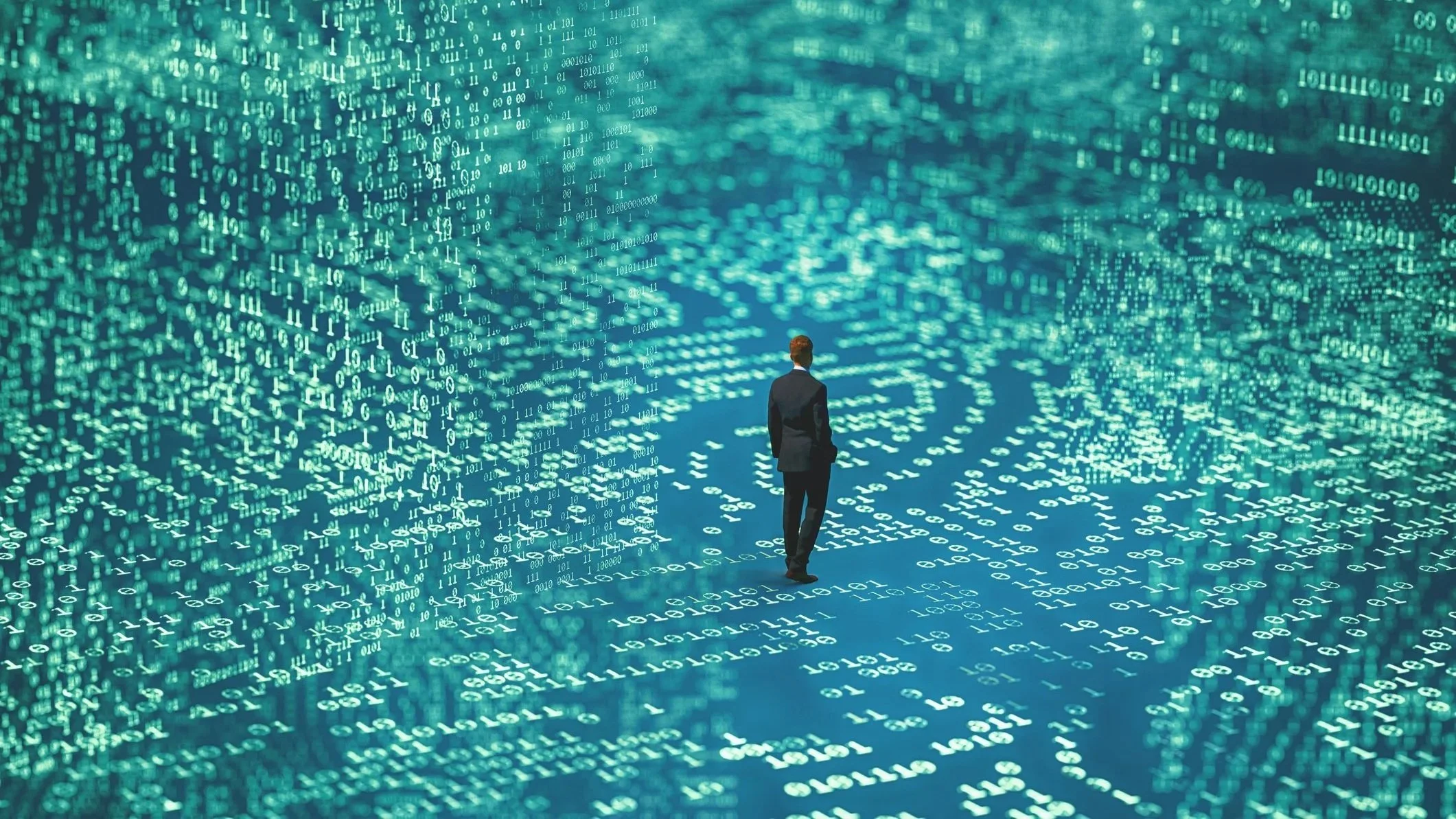
With all the technology we now have at our fingertips, If a marketer wants to write a five-part email nurture sequence, deploy a suite of programmatic display ads, or launch a dozen personalized social posts, with AI images and video, they don’t need weeks.
They need mere minutes.
Because now predictive algorithms and generative AI, the tech stacks of modern marketing can produce a localized, tailored, and perfectly optimized message to anyone, anywhere — instantly.
It’s hard to tell what’s real anymore.

Sure the speed and the efficiency are great. But there’s a down side. This mechanical efficiency has hit a psychological wall. When words and images are created and hyper-artifically-personalized by a machine, nothing feels personal.
As digital channels become saturated with synthetic content that is algorithmically "perfect" yet entirely hollow, consumers are experiencing what we call an authenticity deficit. The signal-to-noise ratio online has reached an all-time high, and the noise all sounds exactly the same.
The Origin of the Deficit
How did we get here? For the last two decades, direct marketing has operated on a foundational premise: more data equals more relevance, and more relevance equals more trust.
We tracked clicks, mapped journeys, and built complex automated triggers. The goal was to remove human friction from the system. If a consumer browsed a pair of boots, an ad for those boots followed them across the internet for a month, accompanied by automated emails offering a 10% discount.

But as tech democratized these automated workflows, the marketplace became homogenized. Algorithms rely on historical patterns to predict future behavior, which means they inevitably optimize toward the average. They use the same high-performing keywords, the same emotional triggers, and the same scannable structures.
The internet didn't just become loud; it became monotonous. Consumers, possessing an innate, evolutionary radar for deception, began to realize that the "helpful" email in their inbox or the "customized" social post in their feed wasn’t born from human intent. It was served up by code. The moment a consumer realizes a message required zero human effort to produce, its perceived value drops to zero. Trust evaporates.
How It Spreads at the Speed of Tech
The authenticity deficit isn't a static problem; it’s an accelerating epidemic that mirrors the hockey-stick curve of technological evolution.
Every time generative AI gets faster or programmatic buying tools get smarter, the deficit widens. The barrier to entry for producing "good enough" content has been obliterated. A solo operator now possesses the same creative volume capacity as a legacy agency.

As a result, consumer feeds are flooded with text that reads a little too smoothly, images that look a little too glossy, and video scripts that follow the exact same structural hooks. The technology is evolving so rapidly that it outpaces our traditional methods of verification. We can no longer trust our eyes or our ears online.
When consumers are forced to operate in a default state of skepticism, their behavior shifts:
The Inbound Filter Tightens: Ad-blocker usage is rising, email open rates are increasingly skewed by privacy protections, and social media feeds are treated with deep cynicism.
The Premium on Effort Increases: Consumers are starving for evidence of real human input, genuine perspective, and physical presence.
Closing the Deficit: The Value of Tactility
So, how do brands survive the authenticity deficit? You don't beat the noise by adding more noise. You beat it by changing the medium.

When the digital landscape becomes entirely synthetic, the physical world becomes the ultimate premium channel.
This is why tactile, tangible touchpoints—like direct mail—are experiencing a massive renaissance. A beautifully crafted, dimensional mail piece or a personalized letter cannot be faked by a web crawler. It requires physical production, postage, and a literal place in the consumer's home. It represents effort.
To bridge the authenticity deficit, brands must stop hiding behind the algorithm. Whether through transparent storytelling, unedited human-to-human interactions, or high-impact physical marketing, the future belongs to those who dare to be real in a world that is increasingly simulated.
Jacobs & Clevenger has spent more than 40 years proving direct marketing works — and we're using AI to make it work even better. Contact J&C to talk about your next campaign.
