
The Real Cost of Getting a Customer
Direct Mail vs. Digital Advertising
Everyone has an opinion about direct mail. Usually it goes something like this:

"It's expensive. It's old school. Digital is cheaper and you can measure everything."
And on the surface, that argument sounds reasonable.
Until you look at what actually matters — the cost to acquire a customer, NOT the cost to send an impression.
And that's where the story gets interesting…
The Number That Actually Matters: Cost Per Acquisition (or Action)
Let's skip past CPM and CPC for a moment and talk about the number that keeps CFOs and CMOs up at night: Cost Per Acquisition (CPA). Because a channel that looks cheap on the front end can be brutally expensive on the back end.
In financial services and insurance, for example, paid search CPA routinely runs $200–$500 or more. Competitive keywords like "life insurance quotes" or "mortgage refinance" can cost $15–$50 per click — and most of those clicks don't convert.

You're essentially paying premium prices to compete in an overcrowded digital auction where Google and Meta hold all the cards.
Direct mail, on the other hand, typically delivers a CPA of $100–$300 in the same categories — despite costing more to send per piece. The math works because response rates are dramatically higher. The Data & Marketing Association consistently reports direct mail response rates of 2–5% for house lists and 1–2% for cold prospect lists. Compare that to display advertising's average click-through rate of 0.1%, or email's (the new “junk mail”) declining response rates hovering around 0.5–2%.
√ More responses.
√ More conversions.
√ Lower cost to acquire.
That's the direct mail advantage hiding in plain sight.
What You're Actually Paying For
A direct mail campaign in financial services typically runs $0.50–$3.00 per piece all-in — printing, postage, list costs included. A 50,000-piece campaign might cost $50,000–$150,000. That sounds like a lot until you compare it to what you'd spend on paid search to reach the same audience at comparable conversion rates.

But there's another aspect of direct mail that rarely gets discussed: shelf life.
A digital ad lives for seconds. If your prospect doesn't click in the moment they see it, it's gone — lost in the scroll.
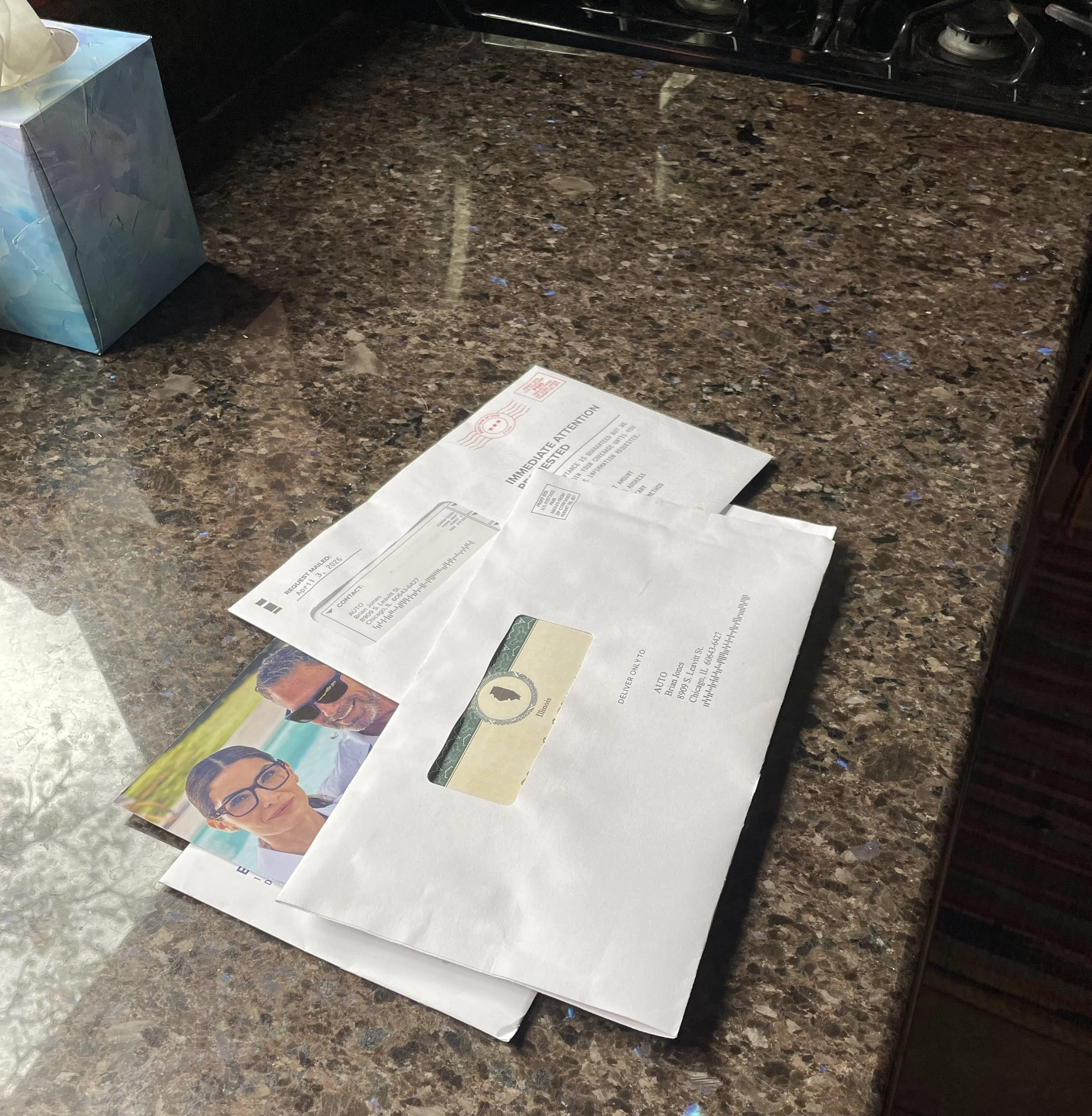
A direct mail piece lands on a kitchen counter and can sit there for days or even weeks, creating multiple impressions during the exact window when your prospect is considering a financial decision. In categories like insurance, retirement planning, or home equity products — where the consumer needs time to think — that physical persistence is enormously valuable.
The Trust Premium
In financial services and insurance, trust isn't a soft metric. It's a conversion driver.

Physical mail carries an inherent credibility component that digital simply cannot replicate. A well-designed direct mail piece signals investment, legitimacy, and permanence in a way that a banner ad or sponsored post cannot. For audiences making high-stakes financial decisions — choosing a Medicare supplement plan, refinancing their home, opening an investment account — that “trust” directly impacts response.
Digital advertising, meanwhile, is fighting headwinds. Ad blockers, banner blindness, spam filters, and platform algorithm changes all erode deliverability and attention. When you mail a piece, you know it was delivered. When you run a digital ad, you're hoping it was seen.
Where Digital Still Wins
To be fair, digital advertising does have its advantages. That can't be ignored.
Real-time analytics, behavioral targeting, lookalike audiences, and retargeting capabilities give digital an edge in speed, precision, and measurability that direct mail can't fully match. If you need to move fast, test a message cheaply, or retarget someone who already visited your website, digital is your tool.
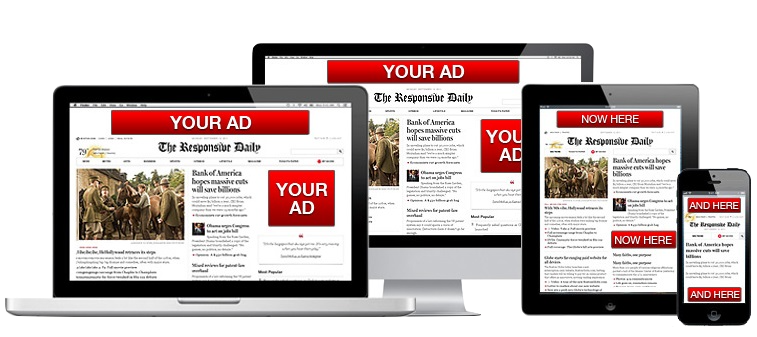
The problem is that too many marketers fixate on the low cost-per-impression of digital and assume it translates to low cost-per-customer. It frequently doesn't — especially in financial services where competition for keywords is fierce and consumer trust barriers are high.
The Real Answer: Stop Choosing Sides
The strongest financial case isn't direct mail or digital...
It's direct mail and digital, working together.
Research consistently shows that combining direct mail with digital touchpoints lifts overall response rates by 20–35% compared to either channel alone. A physical mailer that's followed by retargeted digital ads to the same audience — then reinforced with a targeted email — and finished off with a “last chance” postcard, creates a surround-sound effect that dramatically improves conversion. The customer sees your message in their mailbox, then again on their phone, then in their inbox, then back in the mailbox. That repetition builds the familiarity and trust that drives action.
This integrated approach is where sophisticated direct marketers are winning right now. It's not about abandoning digital — it's about using each channel for what it does best and letting them support each other.
The Bottom Line
Direct mail costs more to send.
It often costs less to convert. And in financial services and insurance — where the product is complex, the decision takes time, and trust is everything — that distinction is the difference between a marketing program that delivers ROI and one that just delivers impressions.
The cheapest channel is rarely the most profitable one. The most profitable one is the channel — or combination of channels — that acquires the right customer at the lowest total cost.
That's not a digital argument. That's not a direct mail argument.
That's just good math and responsible marketing.

Jacobs & Clevenger is a Chicago-based direct marketing agency specializing in data-driven, AI-enhanced campaigns for financial services, insurance, and energy markets. To learn how we can improve your response rates and lower your cost per acquisition, contact us today.
