
Why Direct Marketing Works
Hint: It’s Marketing’s Most Measurable Medium

In an age of digital saturation, algorithm uncertainty, and privacy concerns, one marketing channel continues to deliver what every CMO demands: measurable results, predictable ROI, and the ability to directly connect with customers on their terms.
That channel is direct marketing. And the evidence for its effectiveness isn't just compelling — it's overwhelming.
What Direct Marketing Actually Is (And Why the Definition Matters)
Before we explore why direct marketing works so exceptionally well, let's establish exactly what we're talking about. Because despite being one of the most proven forms of marketing, direct marketing is frequently misunderstood or confused with other approaches.

The Performance Data: How Direct Marketing Stacks Up Against Digital Channels
If the neuroscience isn't convincing enough, let's talk numbers. Because when it comes to measurable performance, direct marketing—and particularly direct mail—delivers results that leave digital channels struggling to compete.
Response Rates That Dwarf Digital Alternatives
The average response rate for direct mail hovers around 4.4 percent for prospect lists and climbs even higher — up to 9 percent— for house lists (customers who've purchased from you before). Some highly targeted campaigns routinely achieve double-digit response rates.
Compare this to email's average response rate of 0.12 percent. Digital display ads perform at under 1 percent. Even the best-performing digital channels struggle to match the baseline performance of a well-executed direct mail campaign.
According to recent industry research, direct mail response rates are 5 to 9 times higher than any other advertising channel. That's not a marginal difference—it's an order of magnitude difference.
And here's what makes this particularly significant: 69 percent of direct mail campaigns achieve response rates exceeding 3 percent. This means the majority of direct mail campaigns outperform the average digital campaign by 30 times or more.
Return on Investment That Proves the Business Case
Response rates matter, but ROI is what pays the bills. And here, direct marketing demonstrates its true power.
Direct mail generates an average ROI of $42 for every dollar spent—among the highest of any marketing channel. Some studies place direct mail's ROI at 112 percent, outperforming SMS (102 percent), email (93 percent), paid search (88 percent), social media advertising (81 percent), and digital display advertising (79 percent).
Think about what this means for marketing budget allocation. If you have $100,000 to invest in customer acquisition, direct mail will typically generate $4.2 million in return. That same investment in digital display might generate $1.79 million. The difference compounds dramatically at scale.
____________________________________________________
“Direct mail generates on average $42 for every $1 spent.”
____________________________________________________
A survey of marketers found that 84 percent agree direct mail provides the highest ROI of any channel they use. This isn't theoretical—this is reported experience from marketing professionals who've tested multiple channels and measured the results.
Open Rates and Engagement That Digital Can't Match
While email open rates languish between 20 and 30 percent (and continue declining as inboxes become more crowded), direct mail enjoys open rates between 80 and 90 percent.
This makes intuitive sense when you think about the user experience. An email is one message among dozens or hundreds received daily, easily ignored or deleted with a click. A physical piece of mail is a tangible object that requires physical handling — and that physical interaction naturally creates engagement.
Research shows that 71 percent of people read their direct mail the day it's delivered. And that mail doesn't disappear immediately — it's kept in recipients' homes for an average of 17 days. During that time, it may be read multiple times, shared with other household members, or serve as a reminder of an offer or opportunity.
____________________________________________________
“71% of recipients read their mail the same day it is delivered.”
____________________________________________________
Nearly a quarter of direct mail is shared with other household members, effectively multiplying your reach at no additional cost. When was the last time someone forwarded your digital display ad to their spouse?
The engagement goes deeper than mere exposure. Studies show that individuals spend approximately 108 percent more time reading content in direct mail than digital marketing materials. More time with your message means more opportunity to communicate value, build desire, and overcome objections.
Conversion Performance That Delivers Business Growth
At the end of the day, marketing success is measured by conversions—turning prospects into customers and customers into repeat buyers. Here again, direct marketing proves its worth.
Research shows that 85 percent of marketers agree that direct mail delivers the best conversion rate of all channels they use. When coordinated with digital channels, direct mail can increase conversion rates by 28 percent.
Direct mail is responsible for 39 percent of customers trying a brand for the first time. That's a remarkable acquisition statistic—nearly four in ten new customers can be traced back to direct mail influence.
____________________________________________________
“85% of marketers agree that direct mail returns the best conversion rate of any channel.”
____________________________________________________
For specific industries, the conversion performance is even more impressive. Real estate investors using direct mail platforms reported generating over $26 million in deal value from direct mail campaigns in a single year. B2B marketers see response rates climbing to 4.4 percent for cold prospects and significantly higher for warm leads.
The Trust Factor: Why Consumers Prefer Direct Mail
Consumer sentiment matters, and here the data reveals something that should reshape how marketers think about channel mix.
Seventy-three percent of American consumers say they prefer being contacted by brands via direct mail. Among younger demographics—those supposedly allergic to anything not delivered through an app—65 percent of Gen Y and 57 percent of Gen Z respondents report being excited to receive direct mail.
Why this preference? In an era of digital fatigue, privacy concerns, and algorithm manipulation, physical mail feels authentic and trustworthy. Seventy percent of consumers say direct mail is more personal than online interactions.
There's also the practical consideration: 42.2 percent of Americans look forward to checking their mailbox daily, and 60 percent of direct mail recipients say the mail they receive is "usually interesting." Contrast this with email, where the average person is overwhelmed by inbox volume and trains themselves to ignore most messages.
____________________________________________________
“73% of consumers say the prefer being contacted with direct mail.”
____________________________________________________
The trust factor extends to brand perception. When a company invests in high-quality direct mail, it signals substance and credibility in ways that digital ads simply cannot. A well-designed direct mail piece communicates that your company has resources, staying power, and confidence in its offer.

The Neuroscience of Why Physical Direct Mail Outperforms Digital
Here's where the science gets interesting — and where digital-first marketers often experience a paradigm shift in their thinking.
Multiple peer-reviewed neuroscience studies using magnetic resonance imaging (MRI) brain scanning, electroencephalography (EEG), and biometric measurements have revealed something remarkable: the human brain processes physical marketing materials fundamentally differently than digital advertisements.
A groundbreaking study by Millward Brown and the Centre for Experimental Consumer Psychology at Bangor University used MRI to observe brain activity while participants viewed both physical and digital advertisements. The findings were unequivocal.
Physical materials activated more processing in the brain areas associated with emotional engagement. Specifically, the medial prefrontal cortex and cingulate—regions connected to emotional processing and value assessment—showed significantly more activity when viewing physical mail compared to digital ads.
The brain's "default network" remained more active when viewing direct mail. This network is associated with internal emotional responses to external stimuli, suggesting that recipients were relating the physical mail to their own thoughts and feelings in ways they didn't with digital messages. The material wasn't just being processed—it was being internalized.
____________________________________________________
“When you eliminate the noise — your marketing becomes more efficient, more effective, and more accountable.”
____________________________________________________
Likewise, Canada Post commissioned research that revealed direct mail requires 21 percent less cognitive effort to process than digital media. Think about what this means: your brain has to work less hard to understand a physical piece of mail, which means the message is processed more efficiently and with less mental friction.
The same research found that participants spent 39 percent more time looking at direct mail compared to email. More attention means more opportunity to communicate your message, build desire, and inspire action.
Perhaps most compellingly, brain scans showed that physical materials generate more activity in areas of the brain involved in processing emotionally powerful stimuli and memory formation. This suggests that physical presentations create more emotionally vivid memories—the kind that drive purchase decisions and brand preference.
The U.S. Postal Service's research with Temple University's Center for Neural Decision Making found that people are 70 percent more likely to remember a brand name when exposed to direct mail rather than digital advertising.
Why does this happen? The answer lies in something called haptic perception—the cognitive process by which we understand and remember things through touch. When you hold a piece of mail, your brain engages multiple sensory systems simultaneously. You're seeing the design, feeling the paper texture, perhaps noticing a subtle scent from the printing process. This multi-sensory engagement creates stronger neural pathways and more durable memories.
The physical nature of direct mail also triggers what researchers call spatial memory networks. Your brain literally encodes where the mail is—on your desk, on your kitchen counter, in your hands. This spatial awareness creates an additional memory anchor that digital messages simply cannot replicate.
And here's the implication that should make every marketer pause: greater emotional processing and stronger memory formation translate directly into better marketing outcomes.
When customers remember your message more vividly and engage with it more emotionally, they're more likely to take the action you're requesting—whether that's making a purchase, requesting information, or visiting your location.
This isn't marketing theory. This is neuroscience.

>> Direct marketing is any form of marketing that creates a one-to-one connection between your brand and a specific individual, with a clear, measurable call-to-action—and without relying on intermediary media or mass broadcast.
This means direct mail pieces landing in mailboxes with personalized messages and response mechanisms. Email campaigns sent to segmented audiences with tracked links and conversion goals. SMS messages triggering immediate action. Even targeted social media with direct response CTAs qualifies when done properly.
What makes direct marketing "direct" isn't the channel—it's the approach. You're speaking to a specific person, you're asking for a specific action, and you're measuring specific results. There's no middleman diluting your message, no mass audience that may or may not include your prospects, and no ambiguity about whether your marketing investment is working.
____________________________________________________
“One marketing channel continues to deliver what every CMO demands: measurable results, predictable ROI, and the ability to directly connect with customers.”
____________________________________________________
This direct relationship changes everything. It means you can personalize messages based on actual customer data. It means you can test different approaches and know definitively which performs better. It means you can calculate exact ROI down to the dollar. And it means you can continuously optimize your marketing based on real performance data, not proxies or estimates.
The term "direct marketing" itself reflects this fundamental principle of removing barriers between your message and your customer. When you eliminate the noise — the mass media outlets, the algorithm gatekeepers, the platforms that stand between you and your audience — your marketing becomes more efficient, more effective, and more accountable.

Why Direct Marketing Is a Better Investment Than Pure Digital
Given the performance data, you might wonder why more marketing budgets aren't allocated to direct marketing. The answer often lies in misconceptions about cost, measurement, and scalability. Let's address each directly.
The True Cost of Acquisition: Looking Beyond CPM
Yes, direct mail has a higher cost per thousand impressions than digital advertising. A direct mail piece might cost $0.50 to $2.00 to produce and mail, while a digital ad impression costs pennies.
But cost per impression is the wrong metric. What matters is cost per acquisition and customer lifetime value.
____________________________________________________
“The trust factor extends to brand perception.”
____________________________________________________
If your direct mail campaign costs $1.00 per piece and generates a 5 percent response rate, your cost per response is $20. If 30 percent of those responses convert to customers, your cost per acquisition is approximately $67.
Compare this to a digital campaign with a $5 CPM, 0.5 percent click-through rate, and 2 percent conversion rate. Your cost per acquisition would be $500—more than seven times higher.
The math changes everything when you focus on actual business outcomes rather than vanity metrics like impressions or clicks.
The Measurement Advantage: Knowing Exactly What Works
One of digital marketing's supposed advantages is measurement and analytics. But the reality of digital measurement is far messier than marketers acknowledge.
Digital attribution is plagued by problems: cookie deprecation, cross-device tracking challenges, walled gardens that don't share data, last-click bias, and the fundamental difficulty of understanding complex customer journeys that span multiple touchpoints and weeks or months.
Direct marketing, by contrast, offers simple, reliable measurement. You send 10,000 pieces. You receive 500 responses. Your response rate is 5 percent. Of those responses, 150 convert to customers. Your conversion rate is 30 percent. You can track these numbers with perfect accuracy using unique offer codes, personalized URLs, or dedicated phone numbers.
You don't need sophisticated analytics platforms, attribution models, or data scientists to understand direct marketing performance. The measurement is built into the medium.
____________________________________________________
“Digital attribution is plagued by problems…cookie deprecation… cross-device tracking challenges… walled gardens… etc.”
____________________________________________________
This measurement clarity enables rapid optimization. You can test different lists, offers, creative approaches, and formats—and know within days which performs better. This test-and-learn cycle compounds over time, continuously improving your results.
The Targeting Precision: Reaching Exactly Who You Want
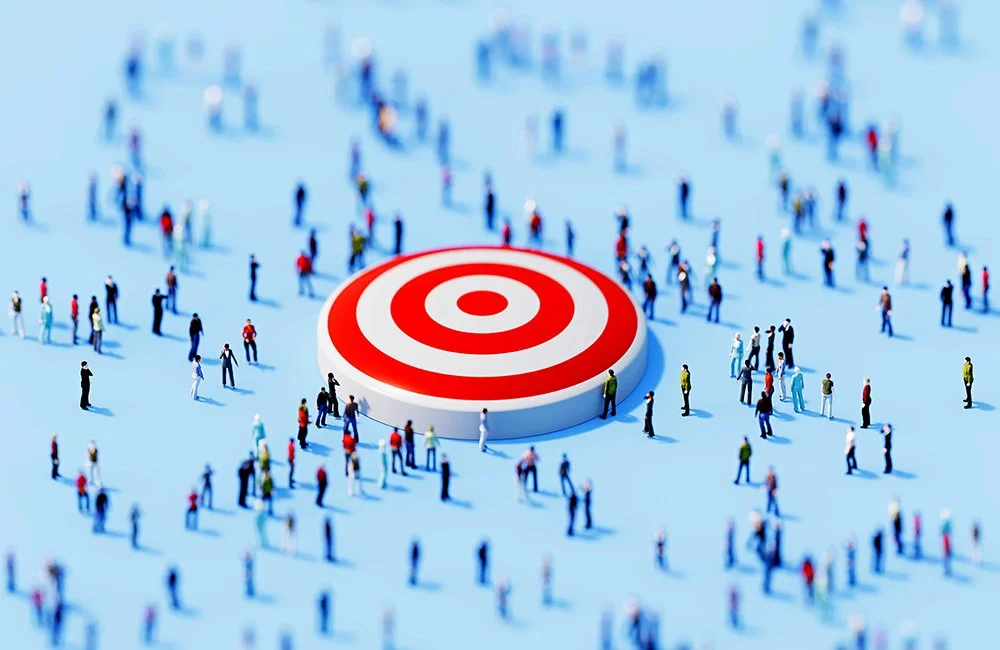
Digital marketers often tout the targeting capabilities of platforms like Facebook or Google. But these platforms fundamentally operate on probabilistic targeting—they're making educated guesses about who might be interested in your offer based on behavior patterns and demographic profiles.
Direct marketing, particularly direct mail, offers deterministic targeting. You're not targeting “women aged 25-34 who like fitness content.” You're targeting Jennifer Martinez at 123 Main Street who purchased from you six months ago and has a household income over $100,000 and owns her home.
____________________________________________________
“Facebook and Google operate on probabilistic targeting—Direct marketing offers deterministic targeting.”
____________________________________________________
The data available for direct marketing targeting is remarkably sophisticated. You can append demographic, psychographic, behavioral, and transactional data to your lists. You can model lookalike audiences based on your best customers. You can overlay location data, life event triggers, and purchase propensity scores.
And unlike digital platforms where your targeting is subject to algorithm changes and platform policy shifts, your direct marketing targeting is entirely under your control.
The Privacy Advantage: Future-Proofing Your Marketing
As privacy regulations tighten and consumers become more protective of their digital data, direct marketing offers a significant advantage: it operates in a well-established, regulated environment with clear rules.
The implications of GDPR, CCPA, and emerging privacy regulations are devastating to digital marketing's surveillance-based model. Cookie deprecation, opt-in requirements, and platform restrictions are making digital targeting less precise and less effective with each passing quarter.
____________________________________________________
“Your direct marketing targeting is entirely under your control.”
____________________________________________________
Eighty-five percent of marketers are adjusting their digital marketing strategy due to data privacy concerns. Of those, 76 percent have opted to reallocate budget to direct mail—a channel unaffected by these digital headwinds.
Direct mail operates under postal regulations that have been refined over decades. The rules are clear, stable, and unlikely to change dramatically. And consumers are far more comfortable receiving postal mail than they are with being tracked across websites and apps.
The Competitive Opportunity: Less Clutter, More Impact
Every business in the world can buy Google ads or Facebook advertising. The barriers to entry are minimal, which means the competition for digital attention is fierce and getting fiercer.
Direct mail, by contrast, has become less crowded as businesses shifted spending to digital over the past two decades. The average American household receives about 454 pieces of marketing mail annually—sounds like a lot until you compare it to the thousands of digital ads people encounter monthly.
This reduced clutter means your message faces less competition for attention. When your well-designed direct mail piece arrives, it's not competing with 47 other advertisements on the same screen. It's a singular physical object that demands attention.
____________________________________________________
“Direct mail has become less crowded as businesses shift to digital.”
____________________________________________________
Research shows that 67 percent of marketers reported that direct mail performance improved in the past year—the highest improvement rate of any channel surveyed. This improvement is happening precisely because fewer marketers are investing heavily in the medium, creating opportunity for those who do.

The Multiplier Effect: Why Direct Marketing Works Exceptionally Well with Digital
Here's where we move from good to transformational: direct marketing doesn't just work well on its own—it dramatically amplifies the performance of your digital marketing when used together.
The Science of Multi-Channel Reinforcement
Neuroscience research has demonstrated that seeing an advertisement in direct mail and then seeing the same or related message online can increase recall by up to 44 percent. This isn't surprising when you understand how memory formation works—repeated exposure through different sensory channels creates multiple neural pathways to the same information, making it easier to retrieve.
Canada Post's research found that combining direct mail with digital advertising increases brand recall, emotional engagement, and purchase intent beyond what either channel achieves alone. The physical experience plants a seed; the digital follow-up waters it.
The data supports this: 97 percent of marketers report that integrating direct mail with digital efforts has a positive impact on performance. This near-universal agreement among practitioners is remarkable and suggests the multiplier effect is both real and substantial.
How the Integration Actually Works
The most effective integrated campaigns follow a strategic sequence. Direct mail serves as the anchor—it creates initial awareness, generates emotional engagement, and establishes credibility. The physical nature of mail makes it particularly effective at breaking through and getting noticed.
____________________________________________________
“Combining direct mail with digital advertising increases brand recall, emotional engagement, and purchase intent.”
____________________________________________________
Digital channels then provide reinforcement and facilitate conversion. When someone receives a compelling direct mail piece and then sees related display ads, social media content, or email messages, the consistency reinforces the message and the varied touchpoints accommodate different customer preferences.
Some recipients will respond directly to the mail piece by calling a phone number or visiting a website printed on the mailer. Others will set it aside and later search for your brand online or respond to a subsequent email. The multi-channel approach captures both immediate and delayed responses.
The integration can also work in reverse: digital marketing can warm up prospects, and direct mail can serve as the conversion catalyst. For instance, you might target website visitors who didn't convert with a remarketing campaign that includes both digital ads and a physical mailer. This approach combines digital's ability to identify interested prospects with mail's superior conversion power.
Quantifying the Lift
When you combine direct mail with digital marketing, you don't get incremental improvement—you get multiplicative enhancement.
Studies show that adding direct mail to a digital-only campaign can:
Increase overall response rates by 28 percent or more
Improve brand recall by 44 percent
Boost conversion rates by 28 percent
Generate 12 percent higher ROI compared to campaigns without mail
Drive 62 percent lift in online campaign performance
Royal Mail research found that direct mail helped improve the lift of online campaigns by 62 percent. That's not a typo—adding mail to your digital mix can increase your digital performance by more than half.
The reason is straightforward: the channels work on different psychological and behavioral levels. Digital creates frequency and builds familiarity. Physical mail creates impact and drives action. Together, they address both the rational and emotional drivers of purchase decisions.
Practical Integration Strategies
The most successful integrated campaigns follow several proven patterns:
Tease and Follow-Up: Send an intriguing direct mail piece that piques interest, followed by email and digital ads that provide more information and facilitate response.
Surround Sound: Coordinate timing so that direct mail, email, display ads, and social content all arrive in a compressed timeframe, creating a sense that your brand is everywhere.
Sequential Storytelling: Use each channel to advance a narrative. Mail introduces a problem, email offers the solution, display ads provide social proof, and landing pages enable conversion.
Digital Retargeting: Use direct mail to reach people who visited your website but didn't convert, combining digital's ability to identify interested prospects with mail's superior conversion rates.
Triggered Automation: Use behavioral triggers (abandoned carts, content downloads, extended inactivity) to automatically send coordinated email and direct mail sequences.
The key is ensuring message consistency while adapting format to each channel's strengths. Your brand voice, visual identity, and core value proposition should remain constant even as the specific content and call-to-action adapt to medium and timing.

Who Should Be Using Direct Marketing (Spoiler: Almost Everyone)
Direct marketing's effectiveness spans industries, company sizes, and marketing objectives. But certain situations particularly benefit from direct marketing's unique strengths.
Financial Services and Insurance
These industries have long been direct marketing's sweet spot, and for good reason. The products are complex, high-consideration purchases that benefit from detailed explanation. Customers value security and trustworthiness—qualities that physical mail conveys better than digital ads. And the regulations around financial marketing make direct mail's clear compliance trail particularly valuable.
Credit card companies, banks, insurance providers, and investment firms consistently achieve strong ROI from direct marketing campaigns targeting both acquisition and customer retention.
Healthcare and Pharmaceuticals
Healthcare marketing faces unique challenges: highly regulated messaging, diverse and often elderly target audiences, need to communicate complex information, and sensitivity around privacy. Direct mail addresses all these challenges effectively.
Medicare supplement insurance, dental plans, pharmaceutical reminders, and hospital services are all successfully marketed through direct channels that offer the ability to provide comprehensive information in a trusted format.
Real Estate and Home Services
When people are making decisions about their homes — whether buying, selling, renovating, or maintaining — direct mail provides a powerful way to reach them at the right time with relevant offers.

Real estate agents sending property listings and market updates, mortgage lenders targeting refinance opportunities, home improvement contractors reaching homeowners, and property management companies marketing to landlords all benefit from direct mail's ability to reach specific geographic areas and deliver high-impact creative.
Automotive
Car buying is a major purchase decision that benefits from direct marketing's ability to deliver detailed information and compelling offers. Both new car dealers and service departments use direct mail to drive showroom traffic and service appointments.
The ability to target by vehicle make, model year, and lease end dates makes direct mail particularly effective for conquest campaigns and service retention programs.
B2B and Professional Services
While B2B marketers often focus on digital channels, direct mail offers unique advantages for breaking through to busy decision-makers. A well-designed dimensional mailer or personalized package can land on an executive's desk and command attention in ways that email cannot.
Professional services firms, technology companies, and B2B suppliers use direct mail for lead generation, event invitations, and relationship nurturing with high-value prospects.
Retail and E-Commerce
Despite being digital-native businesses, many e-commerce companies have discovered that direct mail is their most effective customer acquisition and retention channel.
Catalogs, promotional postcards, and new product announcements drive both offline and online purchases. The physical touchpoint creates brand connection that pure digital interactions cannot replicate.
Retail marketers promoting sales events, grand openings, or seasonal campaigns find that direct mail drives foot traffic more effectively than digital alternatives.
Non-Profits and Associations
Charitable organizations and membership associations have long understood direct marketing's power for donor acquisition, renewal appeals, and fundraising campaigns.
The ability to tell compelling stories, create emotional connections, and include response mechanisms makes direct mail ideal for missions that depend on building relationships and inspiring action.

Making the Case: Why You Should Allocate Significant Budget to Direct Marketing
If you've read this far, you understand the evidence. Now let's translate that evidence into action — specifically, why your organization should be allocating a meaningful portion of your marketing budget to direct marketing campaigns.
The ROI Argument
Start with the economics. If direct mail generates $42 return for every dollar spent while delivering conversion rates 5-9x higher than digital channels, the budget allocation decision becomes straightforward math.
Consider a scenario: you currently spend $1 million annually on digital advertising generating $800,000 in attributed revenue (an 80 percent return). If you reallocated just $250,000 to direct marketing and achieved even a conservative $20 return per dollar spent, you'd generate an additional $5 million in revenue—more than six times what that same budget produced in digital.
____________________________________________________
“You should be allocating a meaningful portion of your budget to direct marketing.”
____________________________________________________
The compounding effect is even more powerful. As you test and optimize direct marketing campaigns, performance typically improves over time. Lists get more refined, creative gets sharper, offers get optimized. Many sophisticated direct marketers achieve ROI of $50-$100+ per dollar spent once programs mature.
The Measurement Certainty
In an era of attribution challenges and data privacy restrictions, direct marketing offers something increasingly rare: clear, reliable measurement that doesn't depend on cookies, pixels, or platform-provided analytics.
This measurement certainty reduces risk. You know what works. You can forecast results with confidence. You can prove to CFOs and boards that marketing spending is generating returns.
For organizations that need to defend marketing investments or demonstrate clear business impact, direct marketing's measurement transparency is invaluable.

The Competitive Advantage
While your competitors pour budget into bidding wars for Google keywords and Facebook attention, direct marketing offers differentiation and less competitive costs.
In many industries, the marketers who've embraced direct marketing are seeing their best performance in years — precisely because competitive intensity has decreased as others chased digital trends.
Being excellent at direct marketing while your competitors ignore it creates sustainable competitive advantage. The capabilities you develop — list management, offer development, creative testing, campaign orchestration — are difficult for competitors to quickly replicate.
The Customer Experience Benefit
Beyond the metrics, direct marketing creates positive customer experiences that build long-term value.
Physical mail shows customers you're willing to invest in the relationship. It provides tangible information they can reference later. It accommodates how many people actually prefer to receive marketing communications.
In customer satisfaction surveys, direct mail consistently scores as one of the most appreciated marketing channels—something that cannot be said for digital display ads or interruptive video advertising.
The Future-Proof Strategy
As digital marketing faces headwinds from privacy regulations, algorithm changes, and platform instability, direct marketing remains steady.
The infrastructure of postal delivery isn't changing. The fundamental human psychology that makes physical mail effective isn't changing. The measurement principles aren't changing.
Building capability in direct marketing now positions your organization for continued success regardless of what happens in the digital ecosystem.

Getting Started: How to Launch Successful Direct Marketing Campaigns
If you're convinced that direct marketing deserves a place in your marketing mix, here's how to begin with confidence.
1. Start with Clear Objectives
Define exactly what success looks like. Are you acquiring new customers? Driving repeat purchases? Generating leads for sales follow-up? Promoting a specific event or offer?
Your objective shapes every subsequent decision—from who you target to what you offer to how you measure results.
2. Invest in Quality Lists
Your campaign's success is largely determined before the first piece of mail is designed. Targeting the right people is paramount.
Work with reputable data providers who can help you identify prospects matching your customer profile. Consider purchasing modeled lists that identify people who look like your best customers. Test multiple list sources to determine which delivers best results.
For customer marketing, invest in data hygiene and append services that enrich your house file with additional behavioral and demographic information.
3. Develop Compelling Offers
Direct marketing lives or dies based on your offer. What are you giving people a reason to respond now rather than later or never?
Test different offer types: percentage discounts, dollar-off amounts, free shipping, gifts with purchase, free trials, consultations, information kits. Find what resonates with your audience and provides sufficient incentive to overcome inertia.
4. Create Thoughtful, Tested Creative
Your creative should reflect your brand while adhering to direct marketing principles: clear benefit statement, compelling visuals, readable copy, strong call-to-action, and easy response mechanisms.
Test different creative approaches. Try different formats (postcards vs. letters vs. dimensional mail). Vary the message emphasis. Experiment with personalization.
5. Make Response Easy
Include multiple ways to respond: phone numbers (ideally toll-free), personalized URLs, QR codes, reply cards. Remove any friction that might prevent someone from taking the action you desire.
6. Plan for Integrated Follow-Up
Don't launch direct mail in isolation. Plan email follow-up sequences. Retarget mail recipients with digital advertising. Ensure your website is ready for increased traffic. Brief your sales team on the campaign so they can reference it when following up on leads.
7. Measure, Learn, Optimize
Track every metric: delivery rates, response rates, conversion rates, revenue generated, cost per acquisition. Compare performance across lists, offers, and creative variants.
Apply learnings to your next campaign. Direct marketing rewards systematic testing and continuous optimization.
8. Scale What Works
Once you identify winning combinations of list, offer, and creative, scale up confidently. The beauty of direct marketing is that performance tends to be predictable—what works at 5,000 pieces usually works at 50,000 pieces.

The Bottom Line: Direct Marketing Works Because Everything Else Is Just Theory
In the final analysis, direct marketing succeeds for a simple reason: it's grounded in measurement reality rather than marketing theory.
You can philosophize about brand awareness, debate attribution models, or speculate about algorithm performance. But with direct marketing, you mail 10,000 pieces and you receive 500 responses.
The math is simple, the results are real,
and the business impact is measurable.
Every neuroscience study confirms what direct marketers have known for decades: physical mail engages the brain differently and more powerfully than digital alternatives. Every performance benchmark shows response rates and ROI that digital channels struggle to match. Every customer preference survey indicates that people appreciate and trust direct mail.
The question isn't whether direct marketing works — the evidence is overwhelming that it does. The question is whether you're going to act on that evidence and allocate meaningful budget to the channel.
For marketers tired of algorithm uncertainty, concerned about privacy headwinds, frustrated by declining digital performance, or simply looking for proven ways to drive measurable growth —direct marketing offers a solution.
It's not a replacement for digital marketing. It's the complement that makes your digital marketing more effective. It's the anchor that grounds your multi-channel strategy in proven performance. It's the channel that delivers the measurable ROI your CFO demands and the emotional engagement your brand needs.
____________________________________________________
“The question isn’t whether direct marketing works—the evidence is overwhelming. It does.”
____________________________________________________
The businesses winning in today's competitive marketplace aren't choosing between direct and digital. They're strategically integrating both, using direct marketing's proven performance to fund continued innovation in digital channels, and leveraging the multiplier effect that comes from coordinated multi-channel campaigns.
The evidence is clear. The business case is compelling. The only question remaining is: when will you make direct marketing a strategic priority?

Ready to Experience Direct Marketing Results?
The difference between reading about direct marketing's effectiveness and experiencing it firsthand is the difference between theory and proof.
If you're ready to launch direct marketing campaigns that deliver measurable results — or if you want to elevate your existing direct marketing to achieve the performance levels discussed here — it's time to partner with an agency that's been delivering direct marketing excellence for over 40 years.
Contact us to discuss how direct marketing can become your most accountable, most effective marketing channel.
Because in a world of marketing uncertainty, direct marketing is certainty. And certainty drives business growth.
Get in Touch
Whether you are new to direct marketing or a seasoned pro —we’re here to help make your next campaign a success.