
The 3 Biggest Challenges of Modern Direct Marketing

In 2026, you’d have to agree that digital marketing has moved past AI experimentation.
Like it or not, we’re now squarely in a complex reality controlled by sophisticated algorithms and heightened consumer skepticism.
Yet the goal remains the same for direct marketers > drive action through personal connection.
But the hurdles have changed.
We no longer compete against other brands for space in the inbox, we are competing against AI gatekeepers, deepfake-driven anxiety and a cultural shift away from browsing on the internet.
To stay relevant, our email and SMS campaigns have to evolve from simple communication tools into high-trust user experiences that bypass AI filters and convert into leads.
What Direct Marketers Have to Contend With Now
1. The AI Summary Gatekeeper
Most people don't read their entire emails because their devices’ AI assistants (tools like Apple Intelligenceand Google Gemini) do it for them. These assistants also create scannable summaries of the content and distill it all down into one sentence.
Issue: If your email is automatically AI summarized, your design, copy and CTAs may never be seen by the consumer.
Challenge: Creatives need to write with a couple things in mind — Acknowledge that they need to use machine-readable data and that they make sure the AI highlights the offer correctly, while still being interesting enough that the reader wants to click through to see the full text of the email.
2. Scams (which are at an all-time high)
With online fraud reaching record levels, consumers are more nervous about clicking unknown SMS or emaillinks. When a message seems too personal or too good to be true, readers’ defenses go up and they assume it’s a phishing attempt.
Issue: The more marketers try to be helpful by using personal data, the sketchier the message feels to a wary customer.
Challenge: Brands are having to adopt Verified Identity standards, which is the process of validating who they are and not a user pretending to be that company. This includes blue checkmarks for email and SMS, which builds trust, combats phishing and helps consumers spot legitimate emails from trusted companies. Direct marketers need to prove their clients are who they you say they are before their customers read one word of their email.
3. The Death of the Link

People are quickly moving away from browsing websites. Most direct marketing now happens inside temporary, short-lived apps or stories.
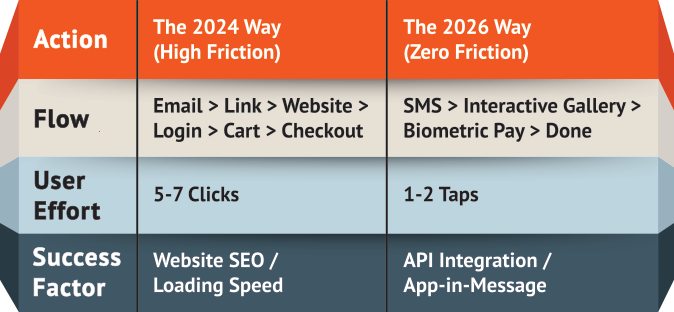
Issue: Consumers don’t like being redirected. They no longer want to click on a link in a text message, wait for a browser to load, log in to a website and then make a purchase. If they have to leave the app they are currently in, many of them simply drop off.
Challenge: Marketers must utilize In-Channel Conversion. This means the entire transaction, from picking the product to purchasing it must happen inside that marketing channel where customers first interacted with the offer. You can’t just send a generic “Check out our site” message. You need to makesure your technical setup is perfect. Otherwise, a broken Mini-Store display could ruin your conversion rates.
Comparison of Direct Marketing Friction
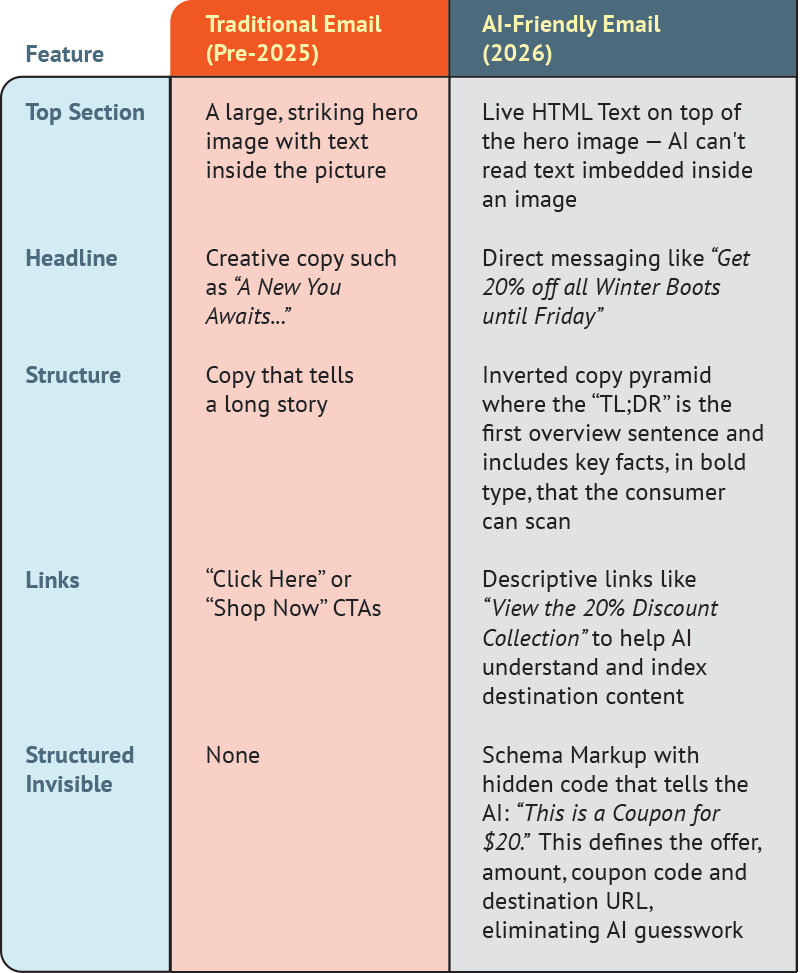
In 2026, the biggest difference between a traditional email and an AI-Friendly email is its structural scannability for an AI assistant. If it can't quickly read your email, it will either ignore it or provide a poor summary to the user.
Email Comparison: Traditional vs. AI-Friendly
What it looks like in practice
The Traditional Approach Fails in 2026
Subject: We have a surprise for you
(Large header image with text "FLASH SALE" inside the image)
"Hey there! We’ve been working hard behind the scenes to bring you something special. You’ve been aloyal customer for a long time, and we wanted to say thanks. If you scroll down, you'll see a code for a discount on our newest items..."
AI Summary for the user: “An update from [Brand Name] thanking you for being a customer." The reader ignores this email because the sale wasn't mentioned in the AI summary.
The AI-Friendly Approach Wins in 2026
Subject: 25% Off Flash Sale: All Sneakers
First Line (Live Text): Sale Alert: Use code RUN25 for 25% off all sneakers until Midnight.
(Image of sneakers with Alt-Text: "Red running shoes 25% off")
Bullet Points:
Offer: 25% Discount
Code: RUN25
Expires: Tonight at 11:59 PM
AI Summary for the user: "Flash sale: 25% off sneakers at [Brand Name] with code RUN25. Expires tonight." The user clicks because the value is clear.
Email service providers replace your preview text with an AI-generated summary. So, if your most important information isn't in the first 50 words of actual text, your open rate will plummet because the AI summary won't give the reader a reason to click, make a purchase or accept your offer.
Navigating these three challenges requires a shift in how we define a successful digital campaign. It’s no longer enough to be creative; we must be precise and transparent. Whether you are optimizing for AI-generated summaries, securing your brand with verified credentials or building frictionless in-channel experiences, this is clear: the 2026 consumer values their time and their online safety.
J&C can help you with these issues by creating marketing campaigns that succeed using the latest technology in an AI-driven environment. Please fill out the form below so we can get started.